
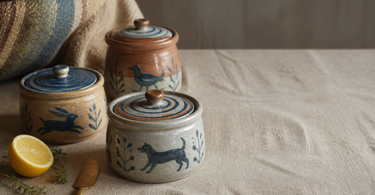
A butter crock keeps butter soft and spreadable at room temperature for up to 30 days — no fridge needed. The principle is simple: a layer of water creates an airtight seal that keeps oxygen out and butter fresh. The crock consists of two parts: a base with water and a lid, where the butter is packed. Beyond its practical function, hand-painted ceramic butter crocks are also a decorative addition to the dining table.
The butter crock isn't new — it dates back to before the days of the fridge, when European kitchens kept butter at room temperature using water as a natural seal. Today it's making a comeback, not because we're short of fridges, but because cold, hard butter on freshly baked bread is a disappointment you can easily avoid. A butter crock solves that problem elegantly whilst adding a functional piece of ceramics to the kitchen table.
What is a butter crock?
A butter crock — also called a butter keeper — consists of two ceramic parts: a deep base that acts as a water reservoir, and a bell-shaped lid with a hollow chamber where the butter is packed. The principle originates from France, where it's known as a beurrier à cloche or "Butter Bell".
When the lid is turned upside down and placed in the base, the layer of water forms an airtight barrier. It's this barrier that keeps the butter fresh. Without oxygen, the fat can't oxidise, and without the fridge's dry cold, the butter stays soft and spreadable.
Ceramic butter crocks are sturdy and keep an even temperature, which is an advantage over, say, glass or plastic. Our range of ceramic butter keepers covers everything from simple, neutral designs to patterned models with characterful animal motifs.
How the water seal works
The function is simple, but requires a bit of precision to work optimally.
Step by step
- Pack the butter: Softened butter (room temperature) is pressed firmly into the lid without air pockets. Fill to about 1 cm from the edge.
- Fill the base with cold water: About 1-2 cm of water is enough to create the seal.
- Insert the lid: Turn it upside down and place it in the base. The water keeps the air out.
- Change the water: Water should be changed every 2-3 days to prevent bacterial growth.
At room temperature up to about 22-24°C, the butter stays fresh for up to 30 days. If your kitchen is warmer than that — for example in summer — you should reduce the amount and change the butter more often.
Tip: Use unsalted butter in the butter crock — it has a shorter shelf life than salted butter and therefore benefits more from the water barrier. Salted butter can certainly be used too, but it already keeps a little longer naturally thanks to the preserving effect of the salt.
Why not just leave the butter out on a plate?
Butter on an open plate is exposed to oxygen and picks up smells from its surroundings. After 1-3 days it starts to turn rancid or taste different. The water barrier in the butter crock prevents exactly that contact, so the butter tastes fresh even after a week.
Ceramics and craftsmanship
Most butter crocks on the market are made from stoneware or faience — two types of ceramics well suited to the purpose. Stoneware is fired at high temperatures (typically 1200-1300°C) and is dense, durable and frost-resistant. Faience is fired at lower temperatures and is light and colourful, but slightly more porous.
Hand-painted versions from European ceramic makers — including English makers such as Quail — bears the mark of that process: no two pieces are quite alike, and motifs like birds, dogs, cats and wild animals are painted with a level of detail that makes the jar worth putting on display, even when it's not in use.
If you prefer a more understated look, there are also butter dishes in Nordic minimalism — smooth surfaces, simple colours, clean design. Take a look at the range from &Klevering, which combines classic ceramic tradition with a modern design language.
| Ceramic type | Firing temperature | Properties | Typical look |
|---|---|---|---|
| Stoneware | 1200–1300°C | Dense, robust, withstands daily use | Matt, rustic, earthy tones |
| Faience | 950–1150°C | Lighter, more porous, colourful | Glazed, pattern-printed |
| Porcelain | 1260–1400°C | Hard, semi-transparent, smooth | Elegant, thin-walled |
Use and maintenance
A ceramic butter dish is generally easy to keep clean, but there are a few things worth keeping in mind.
Cleaning
Wash both parts in warm soapy water. Most ceramic butter dishes aren't dishwasher-safe, as the glaze can be damaged over time by high temperatures and strong dishwasher tablets — always check the manufacturer's instructions. Be especially careful to clean the top for leftover butter in the corners, as butter easily gets stuck there.
Changing the water
Change the water in the base every 2-3 days. If you use the butter dish in a kitchen with lots of strongly flavoured ingredients (onion, garlic, strong spices), it's a good idea to change the water daily, as the butter can absorb aromas through the water surface.
In summer
If room temperature rises above 24-25°C, the butter will start to melt and may fall out of the top and into the water. Reduce the amount of butter and keep an eye on the consistency. Alternatively, you can use the butter dish during the cooler months and keep your butter in the fridge over summer.
Tip: Add a pinch of salt to the water in the base. This inhibits bacterial growth and slightly extends the interval between water changes — particularly useful in winter, when the kitchen is cooler.
Alongside the butter dish, it can be handy to have other ceramic pieces for the table gathered together. A complete breakfast table might include ceramic egg cups, cups and salt and pepper sets — all in the same style, so the table feels visually connected.
The butter crock as a gift
A butter dish is one of those gift types that falls into a category of its own: practical enough to be used, distinctive enough to be remembered. It's an unexpected choice for a wedding registry, for a host who loves to bake, or for someone setting up their first kitchen.
Butter dishes with animal motifs — such as a dog, a cat or a bird — have an appeal that goes beyond pure functionality. They're characterful enough to sit on the kitchen worktop as decoration, yet won't disappear into a drawer, because they're actually useful.
If you want to put together a little gift bundle, the butter dish pairs nicely with a salt and pepper set from Quail or a couple of ceramic plates in matching colours. It gives the gift a coherent and considered look without seeming generic.
Butter dishes from Quail butter keepers are characterised by hand-painted animal motifs with a high level of detail — this isn't mass-produced, but pieces with a clear handcrafted feel. Designs with cats, dogs, rabbits and birds are among the most popular.
Frequently asked questions
How long does butter keep in a butter dish?
Up to 30 days at room temperature under approx. 22-24°C, provided you change the water in the base every 2-3 days. If the temperature exceeds this, you should use the butter more quickly and change the water more often. Unsalted butter has a shorter natural shelf life than salted and benefits especially from the seal.
Can you put the butter dish in the dishwasher?
Most hand-painted ceramic butter dishes aren't dishwasher-safe. High temperatures and strong detergents can break down the glaze over time. Wash them by hand in warm soapy water. Always check the specific product for the manufacturer's recommendation, as ceramic types vary.
What happens if the butter falls into the water?
This typically happens if the room temperature is too high, or the butter isn't packed tightly enough. If the butter has melted into the water, start over: clean both parts thoroughly, pack fresh softened butter firmly into the lid without air pockets, and make sure the kitchen isn't warmer than approx. 22-24°C.
Which type of butter works best?
Both types — salted and unsalted — work fine. Unsalted butter has a shorter shelf life and benefits most from the water seal. Plant-based butter alternatives can also be used, but the consistency varies a lot from product to product, and not all are equally suited to holding their shape in the lid.
How often should the water be changed?
Every 2-3 days is a good rule of thumb. In warm weather or in kitchens with lots of aromatic ingredients, you should change it daily. A pinch of salt in the water can inhibit bacterial growth and extend the interval slightly. Yellow or cloudy water is a sign that it's time for a change.
Are butter dishes only for butter?
Mainly, yes. The function itself is designed for butter, as it's the fat's consistency and water content that make the water seal possible. Hard margarine and plant-based alternatives with a high fat percentage can work, but soft spreads, cheese or other toppings aren't suitable — they need refrigeration.
Summary
The butter dish is a piece of kitchenware with logic that holds up: water seals out the air, and the butter stays soft and fresh for up to 30 days at room temperature. Ceramic is the preferred material because it's durable, dense and keeps the temperature even. Hand-painted versions with animal motifs or graphic patterns add a visual dimension that makes the dish more than just a storage container — it belongs on the table, not in a cupboard. Maintenance is minimal: change the water every 2-3 days and wash by hand. As a gift, it's surprising, useful and long-lasting in the truest sense.
Explore our range of ceramic butter keepers and butter dishes— from hand-painted animal motifs to simple, modern versions.