
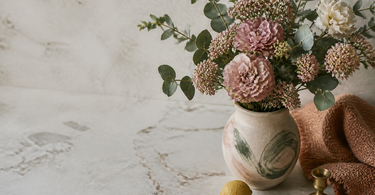
There was a time when artificial flowers meant plastic blooms in faded colors gathering dust in a corner. Those days are gone. Today’s artificial flowers are crafted with such attention to detail that it’s hard to tell them apart from real flowers—even up close. Stems with real wire inside, leaves with lifelike veins, and petals in multiple layers and shades. The result is flowers you can enjoy year-round without a single watering can.

Why choose artificial flowers?
There are several reasons why artificial flowers have become so popular:
- No maintenance. They don’t need watering, trimming, or fresh water. Set them up and forget about them.
- Hypoallergenic. If you have hay fever or a pollen allergy, you can finally have “flowers” in your home without sneezing.
- Durability. A bouquet of fresh flowers lasts a week. Artificial flowers last for years.
- Cost-effective over time. A bouquet of fresh flowers costs $15–$30 every week. Artificial flowers pay for themselves within a month or two.
- Season-independent. Want peonies in December? Cherry blossoms in October? With artificial flowers, it’s possible.
Quality differences: Cheap vs. realistic
Not all artificial flowers are created equal. Cheap versions from discount stores are often easy to spot—plastic-like material, uniform colors, stiff stems. The more expensive, more realistic artificial flowers have several features you should look for:
- Stems: Good artificial flowers have wire in the stem, so you can bend and shape them naturally.
- Petals: Look for variation in color—real flowers are never solid-colored. The best artificial flowers have gradients and small “imperfections” like brown edges.
- Leaves: Realistic leaves have visible veins and a matte surface. Shiny, uniform leaves immediately give away that the flower is artificial.
- Weight: High-quality artificial flowers feel heavier than cheap versions because the materials are better.
Bloomingville Artificial Flowers
Bloomingville offers a wide range of artificial flowers that capture the Scandinavian aesthetic. Their selection includes peonies in soft pink tones, eucalyptus branches with their characteristic blue-green leaves, ferns to add volume to a bouquet, and flamingo flowers (anthurium) in bold colors. Bloomingville’s strength lies in how authentic the flowers look in Scandinavian homes—the colors are muted, the shapes organic, and the stems have a natural curve. They pair well with dried flowers for a more vibrant look.
Which artificial flowers look the most realistic?
Eucalyptus is almost impossible to tell apart from the real thing because the real leaves already have a slightly “plastic” surface. Peonies, with their many layers of petals, do a great job of hiding the fact that they’re artificial. Olive branches with small fruits also look very lifelike. Avoid artificial sunflowers and tulips unless the quality is high—they’re harder to make look realistic because the real flowers have a very distinctive texture.
Styling with artificial flowers
The biggest mistake people make with artificial flowers is treating them like fresh flowers. Here are some better approaches:
- A single branch in a statement vase. A single eucalyptus branch in a large floor vase can be Everything a room needs.
- Mix with dried flowers. Artificial and dried flowers complement each other well and create a more organic bouquet.
- Group by type. Instead of a mixed bouquet, you can arrange three or four peonies in one vase and eucalyptus in another. This creates a more streamlined look.
- Bend the stems. Use the wire’s flexibility to create natural curves instead of letting everything stand stiff and straight.
The right vase for artificial flowers
Artificial flowers don’t need water, so you have free rein—even with vases that aren’t usually suitable for fresh flowers. Animal vases from Quail are fantastic for a single artificial flower sticking up from the back of a ceramic bird. Colorful vases can match or contrast the flowers for an eye-catching arrangement. And because no water is involved, you can use vases made of materials that usually can’t tolerate moisture—unglazed ceramic, metal, wood.
Do you have a lot of artificial flowers? Distribute them among several small vases around the home instead of gathering them all in one place. This creates a more natural feel and avoids the “artificial bouquet” look.
Caring for Artificial Flowers
Artificial flowers require minimal care, but they aren’t entirely maintenance-free:
- Dust regularly. Use a soft brush or a hairdryer on the cool setting to remove dust from leaves and petals.
- Deep cleaning. A few times a year, you can soak the flowers in lukewarm water with a little dish soap, rinse them, and let them air dry.
- Avoid direct sunlight. Even the best artificial flowers will fade over time in direct sunlight. Place them away from south-facing windows.
- Rearrange. Move the flowers around your home periodically so they don’t feel static and “forgotten.”
Combine your artificial flowers with beautiful planters for a complete, green look.
Frequently Asked Questions
Can artificial flowers be placed outside?
Most artificial flowers are intended for indoor use. UV radiation and weather conditions break down the materials faster outdoors. If you want artificial flowers on your patio, look for UV-treated varieties.
How do I keep artificial flowers from looking cheap?
Invest in fewer, but better-quality flowers. Bend the stems so they look natural. Place them in a beautiful vase. And feel free to mix in dried elements for extra texture and authenticity.
Where can I find artificial flowers at Dim's Studio?
We have a selection of artificial flowers from brands like Bloomingville, carefully chosen for their realistic appearance and Scandinavian aesthetic.
