
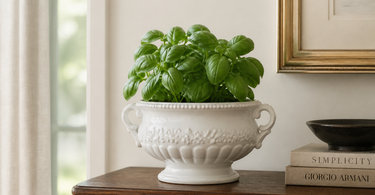
A jardinière is a decorative plant-holding piece of furniture with French roots dating back to the garden-inspired interiors of the 1700s. Unlike a plant pot cover, which conceals a flowerpot, a jardinière is a self-contained object with its own container. Today, the term is used broadly for larger, often sculptural plant holders in materials such as ceramic, metal and wood — for both indoor and outdoor placement.
The term jardinière crops up in home magazines, antique shops and plant enthusiasts' vocabulary — but what does it actually mean? The word comes directly from the French jardin (garden), and it tells us something central about the object's function: bringing the garden into the home. A jardinière isn't just a pot or a cover. It's a category of its own, with a specific design history and a distinct visual language that sets it apart from its closest relatives in the plant world's furniture hierarchy.
What does jardinière mean?
The word jardinière is French and literally means "garden girl" or "woman of the garden" — a feminine derivation of jardinier (gardener), which itself comes from jardin (garden). In Danish, the word is used unchanged and covers a decorative piece of furniture or ceramic designed to hold plants or flowers.
The definition covers two variants:
- The furniture type: A stand or table — typically with legs — with an integrated container or tray for plants. This type was widespread in European salons from the mid-1700s.
- The ceramic or metal form: A self-contained, often ornamented vessel with thick walls and a flat or rounded base, functioning as a direct plant container without needing a separate stand.
What both have in common is that the jardinière has its own visual identity — it's designed to be seen, not hidden away. It's an interior object on a par with a sculpture or a vase, and the plants are part of the overall expression.
Tip: If you're unsure whether an object is a jardinière or a plant pot cover, look at the base: a jardinière is often made for planting directly into (with or without a drainage hole), while a plant pot cover is open at the top and designed to hold an existing flowerpot.
The history of the jardinière from the 1700s
The jardinière emerged as an interior piece of furniture in France in the first half of the 1700s, closely tied to the rococo period's fascination with nature, gardens and the lighter side of life. Versailles and its jardins à la française — the strictly geometric French gardens — set an aesthetic agenda that rubbed off on everything from wallpaper to furniture.
From orangery to salon
Among the wealthy upper classes, growing exotic plants indoors — particularly citrus fruits, southern flowers and orchids — was a status symbol. Orangeries and winter gardens were costly to build, so an alternative solution gained ground: elegant plant stands that could be placed in the salons and send the same signal of wealth and refinement. These early jardinières were typically made from gilded wood, porcelain or painted metal with classicist or oriental motifs.
Empire and Victorian era
In the Empire period (early 1800s), the jardinière became a fixture of the middle-class home across Europe. It took on firmer lines and a more symmetrical design. In the Victorian era, interest in houseplants exploded, and jardinières in cast iron, majolica ceramic and brass were produced in large numbers. English factories such as Minton and Wedgwood made ornamented ceramic versions that are still sought after by antique collectors.
From the late 1800s and towards art nouveau, the jardinière experienced a design renaissance with organic shapes, floral motifs and the characteristic sinuous visual language. Many of the jardinières now regarded as classic collector's items date from this period.
Jardinière vs. plant pot cover vs. flowerpot
The three terms are often used interchangeably, but they actually cover different objects with different functions and design logic. Here's the difference set out systematically:
| Property | Jardinière | Plant pot cover | Flowerpot |
|---|---|---|---|
| Primary function | Decorative plant furniture/container | Hides the plastic surface of the plant pot | Growing the plant |
| Design focus | Sculptural, visible object | Complements the plant | Functional, often neutral |
| Drainage hole | Varies (often not) | Never | Always (with correct growing conditions) |
| Used with another pot | Rarely | Always | No (is the container itself) |
| Typical size | Medium to large | All sizes | All sizes |
| Historical origin | France, 18th century | Widespread, 20th century | Antiquity |
In practice, the line is blurred: many objects sold as pot covers have the jardinière's visual weight and historical design language. The key question is whether the object is designed to hide something — or to be the main aesthetic element itself.
Materials and shapes
The jardinière has been produced in a wide range of materials, and the choice of material has typically reflected the dominant craft traditions and access to raw materials of each period.
Ceramics and stoneware
Ceramics is probably the most widespread material in the jardinière's history. The porous structure regulates moisture, and the thermal mass protects the roots against temperature fluctuations. Classic jardinières in majolica (lead-glazed faience with colourful painting), terracotta and stoneware still hold their value in the world of antiques. Ceramic plant elements for wall mounting draw on the same tradition, but in a more compact and modern interpretation.
Metal: cast iron, brass and zinc
Victorian and Edwardian cast-iron jardinières are sturdy and weatherproof, and many are still in use in gardens and on terraces. Brass and gilded metal were preferred for indoor use in the more lavish versions. In the 20th century, galvanised zinc gained popularity as a lighter and cheaper alternative with an industrial feel.
Wood and wicker
Wood variants — particularly in dark oak, mahogany and bamboo — were widespread in Victorian times as combined stand-and-jardinière solutions. Wicker and woven bamboo gave a more exotic and lighter aesthetic, suited to the salons' oriental inspirations.
Modern materials
Today, fibreclay (a blend of fibreglass, cement and clay), polystone and recycled plastic are used on a large scale. These materials make it possible to imitate classic shapes at a lower cost and lighter weight — relevant for both rooftop terraces and indoor use.
Modern use and placement
The jardinière is not a museum object. It very much lives on in today's interior design, albeit under different names and in new materials.
Indoors
Large ceramic shapes planted with monstera, fig or olive are placed today as sculptural anchor points in living rooms, hallways and office environments. The function is the same as in the salons of the 18th century: the plant as a status object and a connection to nature. A lemon-yellow pot cover in a warm colour tone can play the same role as a classic painted jardinière — the colour becomes part of the room's composition.
Outdoors
On terraces and balconies, jardinieres and large plant containers are used to create green rooms-within-rooms. Rectangular, bench-length varieties (the so-called "window boxes" or balcony box versions) define edges and create privacy. Circular jardinieres with planted box balls or topiary carry on the French garden inspiration that started it all.
Ceramic wall planters
A particularly modern interpretation is ceramic wall planters for plants — a vertical jardiniere that frees up floor space and brings the plant up into view. This type combines the jardiniere's decorative ambition with a compact, wall-integrated form that suits today's homes with limited square metres.
How to choose the right one
The choice of jardiniere — or the object that actually fulfils the jardiniere's function in your home — depends on three parameters: the plant, the space and the aesthetic.
Match the size to the plant
A rule of thumb: the jardiniere's diameter should be 3-5 cm larger than the plant pot's diameter if you're using it as a cover pot. If you plant directly in the jardiniere, there should be at least 5-8 cm for the roots to expand into. A container that's too small slows growth; one that's too large increases the risk of root rot, because the soil holds too much moisture.
Match the material to the environment
Outdoors in winter: ceramic needs to be frost-resistant (stoneware fired above 1200°C or fibreclay). Indoors with direct sunlight: light-coloured ceramic or white concrete reflects heat and protects the roots. Damp rooms like the bathroom and kitchen: glazed ceramic or surface-treated metal.
Think in terms of proportions and colours
A tall, narrow jardiniere lifts a hanging plant up and visually extends the room. A low, wide shape anchors a large plant and provides stability. Your choice of colour should relate to the room's overall palette — a neutral jardiniere lets the plant speak for itself, while a bold, colourful version is a design statement in its own right. Take a look at, for example, our pot covers to see how colours and shapes play together with different types of plants.
Frequently asked questions
What's the difference between a jardiniere and a pot cover?
A jardiniere is a standalone decorative plant piece of furniture or container with its own design ambitions — you can plant directly in it. A plant pot cover is designed to hold an existing plant pot and hide its plastic surface. In practice, the two categories overlap, but the distinction is about whether the object is self-supporting or a complement.
Can you plant directly in a jardiniere without a drainage hole?
It's possible, but it requires a thick layer of drainage material (2-4 cm of coarse gravel or leca pebbles) at the bottom, and you need to water with great care. Without drainage, excess water collects around the roots and causes root rot. Many gardeners prefer to place a plant pot with a drainage hole inside the jardiniere rather than planting directly in it.
When did the jardiniere historically emerge?
The jardiniere as a decorating element emerged in France in the first half of the 1700s, closely linked to the rococo period's interest in nature and the French garden ideal. It spread to the rest of Europe during the Empire period and reached its commercial peak in the Victorian era, when ceramic and cast-iron manufacturers produced them in large numbers.
What does jardiniere mean in Danish?
The word is borrowed directly from French and is used untranslated in Danish. It comes from jardin (garden) and literally means "garden girl" or "female gardener". In Danish, it covers a decorative plant-holding piece of furniture or vessel — typically with an ornamented look and a certain visual weight.
Which materials are best for an outdoor jardiniere?
For outdoor use in the Danish climate, frost-resistant stoneware (fired at a minimum of 1200°C), fibreclay or galvanised metal is recommended. Avoid untreated terracotta and porcelain outdoors in winter — they can crack when frost sets in. Fibreclay is a good compromise: it mimics the look of ceramic but weighs significantly less and withstands frost.
Is a jardiniere the same as a flower bowl?
Not exactly. A flower bowl is a Danish term that often covers lower, hemisphere-shaped plant containers — typically for outdoor use. The jardiniere is a broader category with French historical roots and greater variation in form. Many flower bowls can be called jardinieres, but not all jardinieres are flower bowls.
Summary
A jardiniere is far more than an alternative word for a plant pot. It's a design category with roughly 300 years of European design history, defined by its French origins and its dual function as a plant holder and sculptural interior object. The distinction from the pot cover is primarily about design intent: the jardiniere is meant to be seen and often to be planted in directly, while the pot cover is a complement to an existing plant pot.
In practice, the line is fluid, and the key thing is to understand what you're looking for: a decorative statement piece that can carry the room's visual attention, or a more understated element that lets the plant speak for itself. Both approaches are valid — and both are rooted in the same French garden fascination that started it all 300 years ago.
Explore our range of pot covers and plant containers — from classic ceramic shapes to modern, colourful varieties.