
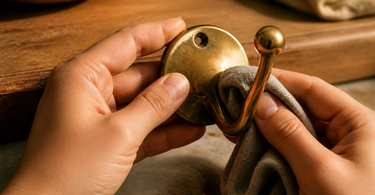
Brass patinas naturally over time — oxidation darkens the surface and gives a warm, antique tone. If you want to keep the shiny look, you polish with a mild acid (lemon or vinegar) or a dedicated brass polish. If you want to keep the patina layer, stick to dry wiping and avoid acids. Brass with a lacquered finish only needs soapy water. The two methods each require their own maintenance routine.
Brass is an alloy of copper and zinc — and it's precisely the copper content that causes the material to react with moisture and oxygen in the air. The result is patina: an oxidation layer that gradually darkens the surface from golden to bronze-brown. Whether you see it as wear or charm depends on taste and style. What matters is that you understand which look you're after before you start treating your brass items — as the two approaches are opposites of each other.
What happens to brass over time?
Brass typically contains 60–85% copper and 15–40% zinc, depending on the alloy. It's the copper atoms that oxidise when they meet oxygen and moisture. The process is called chemical oxidation and is completely natural — not a fault or a flaw in the material.
The first signs appear as a duller surface and a faint yellow-brown tone. Over months and years, a darker layer develops with shades from chocolate brown to almost black in the depths. This layer is also called patina or verdigris in the more greenish variants, which can occur with prolonged contact with moisture.
What accelerates oxidation?
- Fingerprints – the fats and acids in skin trigger oxidation locally
- Humidity – rooms with high humidity (bathroom, kitchen) patina faster
- Salt and acid – coastal environments or contact with acidic foods cause a faster reaction
- Heat – high temperatures increase the reaction rate
Patina is itself a protective layer — it slows down further corrosion and protects the core material. Many choose to keep it for this very reason, particularly on brass hooks and knobs, where the antique surface suits a patinated interior.
Lacquered vs. unlacquered brass
Before you start polishing or caring for your items, it's essential to know whether your brass items are lacquered. This is a point many overlook, and it changes the entire maintenance routine.
How to find out
Lacquered brass has a clear protective coating that delays or prevents patina forming. You can test it with a discreet spot: rub a cotton swab dipped in vinegar or lemon juice on a hidden area. If it reacts (i.e. the surface lightens), it's unlacquered. If nothing happens, there's probably a lacquer on it.
| Property | Lacquered brass | Unlacquered brass |
|---|---|---|
| Patinas naturally | No (or very slowly) | Yes |
| Cleaning | Mild soapy water + soft cloth | Acids, polish or dry wiping |
| Can it be polished with acid? | No — it ruins the lacquer | Yes |
| Maintenance frequency | Low | Medium to high |
| Lifespan without treatment | Long (the lacquer determines this) | Shorter without care |
If your brass is lacquered, maintenance is simple: warm water, a little washing-up liquid and a soft cloth. Avoid abrasive sponges, acetone and strong cleaning products, as they attack the lacquer's surface.
How to polish brass to a shiny finish
If you want brass that shines like new, the oxidation layer needs to be removed. This can be done chemically (with acids) or mechanically (with abrasives). A homemade solution or commercial polish — both work, but with slightly different mechanisms.
Lemon and salt — the classic method
Cut a lemon in half and dip it in fine salt. Rub directly onto the brass surface with circular movements. Citric acid (pH 2–3) chemically dissolves the oxide layer, while the salt acts as a mild abrasive. Rinse thoroughly with water afterwards and dry immediately — otherwise, residual acid continues the reaction. This method works well on brass wine stoppers and other compact objects.
Vinegar and flour — the paste method
Mix 1 part white wine vinegar, 1 part salt and flour into a thick paste. Apply, leave for 10–15 minutes, rub with a soft cloth and rinse. The flour gives the paste consistency, so it stays on the surface and works evenly. Vinegar contains acetic acid (pH approx. 2.5), which works similarly to citric acid.
Commercial brass polish
Products like Brasso or Autosol contain a combination of mild acids, abrasives and surfactants. They often give a more even result than a homemade solution and protect the surface briefly after treatment. Apply with a soft cloth, rub in circular motions, and buff off with a clean cloth.
Tip: Always polish with a soft cloth — not a kitchen sponge or steel wool. Abrasive materials leave micro-scratches that actually accelerate future oxidation by increasing surface area. An old cotton t-shirt is ideal for both application and buffing.
Final protection
After polishing, you can apply a thin layer of mineral oil or beeswax. This forms a barrier against moisture and oxygen and extends the shiny look by weeks to months, depending on exposure.
How to preserve the patina
Patina isn't dirty — it's chemistry. Many people deliberately choose to preserve the darkened layer because it adds depth and character. Especially on brass jars an even layer of patina can give an antique, warm aesthetic.
Principles of patina preservation
- Dry wiping – use a dry or slightly damp cloth to remove dust and loose dirt
- Avoid acids – lemon juice, vinegar and acidic cleaning products remove the patina layer
- Avoid abrasives – steel wool and sandpaper remove patina mechanically
- Minimal handling – fingerprint grease oxidises locally and creates uneven patina
Cleaning without removing patina
If you have dirt that requires more than wiping, you can use lukewarm water with a very small amount of neutral soap (pH 7). Rub gently, rinse quickly and dry immediately. Avoid leaving the object wet — water accelerates oxidation and can cause uneven spots.
If you want to speed up the patina — for example, on a new object that looks too shiny — you can expose it to ammonia vapour in a closed container for 30–60 minutes. The ammonia reacts with the copper and forms an aesthetic dark layer faster than natural oxidation.
Everyday maintenance and prevention
Whether you polish or preserve patina, it's regular maintenance that determines the condition of the brass over time. A simple routine prevents damage and reduces the need for in-depth treatment.
Weekly routine
Dust off with a soft, dry cloth. It takes less than a minute per object and removes the dirt that would otherwise contribute to uneven oxidation. Use the soft bristles of a paintbrush for hard-to-reach details and reliefs — for example, on ornamented brass knobs.
Monthly routine (polished brass)
Polish with your preferred method and apply protective oil or wax afterwards. Check for early greenish spots — a sign of copper carbonate that requires quicker chemical treatment.
Storage
Store brass items somewhere dry and away from direct sunlight, which can cause uneven discolouration. If you're storing them in drawers or boxes, wrap them in acid-free paper — not newspaper, as printing ink is mildly acidic.
Mistakes that damage brass
Some cleaning methods that seem intuitive can actually damage the brass surface permanently. Here are the most common pitfalls.
The dishwasher
Strong detergents at high temperatures are destructive to brass — especially unlacquered brass. The lacquer wears off, and the surface can become stained or unevenly discoloured. Brass wine stoppers and other items used for food must always be washed by hand.
Steel wool and abrasive sponges
Even a light scratch on the surface opens up microcavities where moisture and oxygen can get in and speed up oxidation. Only use soft cloths or non-abrasive sponges.
Strong acids and chlorine
pH below 1 (hydrochloric acid, sulphuric acid) can attack the alloy itself and strip zinc from the surface — a phenomenon known as dezincification, which leaves behind a porous copper structure with no strength. Stick to mild household acids or commercial brass polish with a controlled pH.
Letting water dry on its own
Water spots are one of the most common causes of uneven patina. Hard water leaves mineral deposits that bind to the surface. Always dry brass items straight away after contact with water.
Frequently asked questions
Can I use toothpaste to polish brass?
Yes, toothpaste contains mild abrasives and can be used on unlacquered brass in a small amount. The result is rarely as even as with dedicated brass polish, and toothpaste is alkaline (pH 8–10), which can leave a white residue in relief details. It's a quick fix, not a recommended routine.
How often should brass be polished?
It depends on placement and exposure. Brass in a humid kitchen or bathroom may need polishing every 4–6 weeks. In dry, temperate rooms, 2–4 times a year is enough. Regular drying and a layer of protective oil or wax significantly extend the intervals.
Are green spots on brass dangerous?
Green spots are copper carbonate — the same substance that forms the green patina on copper roofs. It's not dangerous to touch, but it's a sign of active corrosion that should be dealt with. Remove with a vinegar-and-salt solution and rinse thoroughly. On items used for food, you should remove it before use.
Can I keep the patina on part of a brass item and polish the rest?
Yes. It requires precise application — use cotton buds for acid treatment in defined areas and cover the rest with tape or a resist. The technique takes a bit of patience, but lets you highlight relief details and features with contrast between polished and patinated brass.
Does ketchup work for polishing brass?
Yes — ketchup contains acetic acid and citric acid from the tomatoes, and its thick consistency keeps the acid on the surface. Apply, leave for 10–15 minutes and rub off with a soft cloth. The effect is comparable to the lemon method. Rinse thoroughly afterwards to avoid sugar residue, which attracts bacteria.
Should brass be sealed after polishing?
It's not necessary, but it is recommended. A layer of beeswax, carnauba wax or mineral oil creates a barrier against air and moisture and extends the polished finish. Alternatively, you can have a professional apply a new clear lacquer — this gives the longest-lasting protection and requires the least maintenance going forward.
Summary
Brass calls for a conscious choice: do you want it polished or patinated? The two approaches are opposites and require opposite methods. Polished brass is cared for with mild acids (lemon, vinegar) or commercial polish, followed by a protective layer of oil or wax. Patinated brass only needs dry wiping and deliberate avoidance of acids and abrasives. Lacquered brass is the simplest — it just needs soapy water. Whatever the finish, regular, gentle maintenance and quick drying after contact with water are the two most important factors for keeping brass looking healthy over time.
Explore our range of brass hooks and knobs, brass jars and brass wine stoppers — all in unlacquered or lacquered finish.